.svg)



The Science of Sound Frequency and Human Performance
The Science of Sound Frequency and Human Performance
Peer-reviewed evidence that targeted sound frequency compositions measurably improve cognitive performance, recovery, sleep, and autonomic regulation — across the five performance domains.
Peer-reviewed evidence that targeted sound frequency compositions measurably improve cognitive performance, recovery, sleep, and autonomic regulation — across the five performance domains.
Start free trial

The Stress Epidemic
Stress is the #1 limiter of human performance. It isn’t just a feeling, it’s a physiological state that impacts how you think, sleep, and perform. Chronic stress is driving poor sleep, mental fatigue, and decreased resilience—quietly compounding over time. In fact, up to 90% of all doctor visits are linked to stress-related conditions (WebMD).
Mental, Physical, and Emotional Benefits
Cognitive Performance
Enhances focus, memory, and mental clarity; improves stress resilience
Physical Performance
Increases sleep performance, recovery, and parasympathetic activation
Psychological Performance
Promotes emotional regulation and stability in high-stress situations

Readiness & Recovery
Enhances readiness, reduces fatigue, and improves decision-making under pressure
Mental
Physical
Emotional


- Enhanced stress resilience
- Increased cognitive function and coherence
- Improved mood and sleep quality

What are sound frequencies?
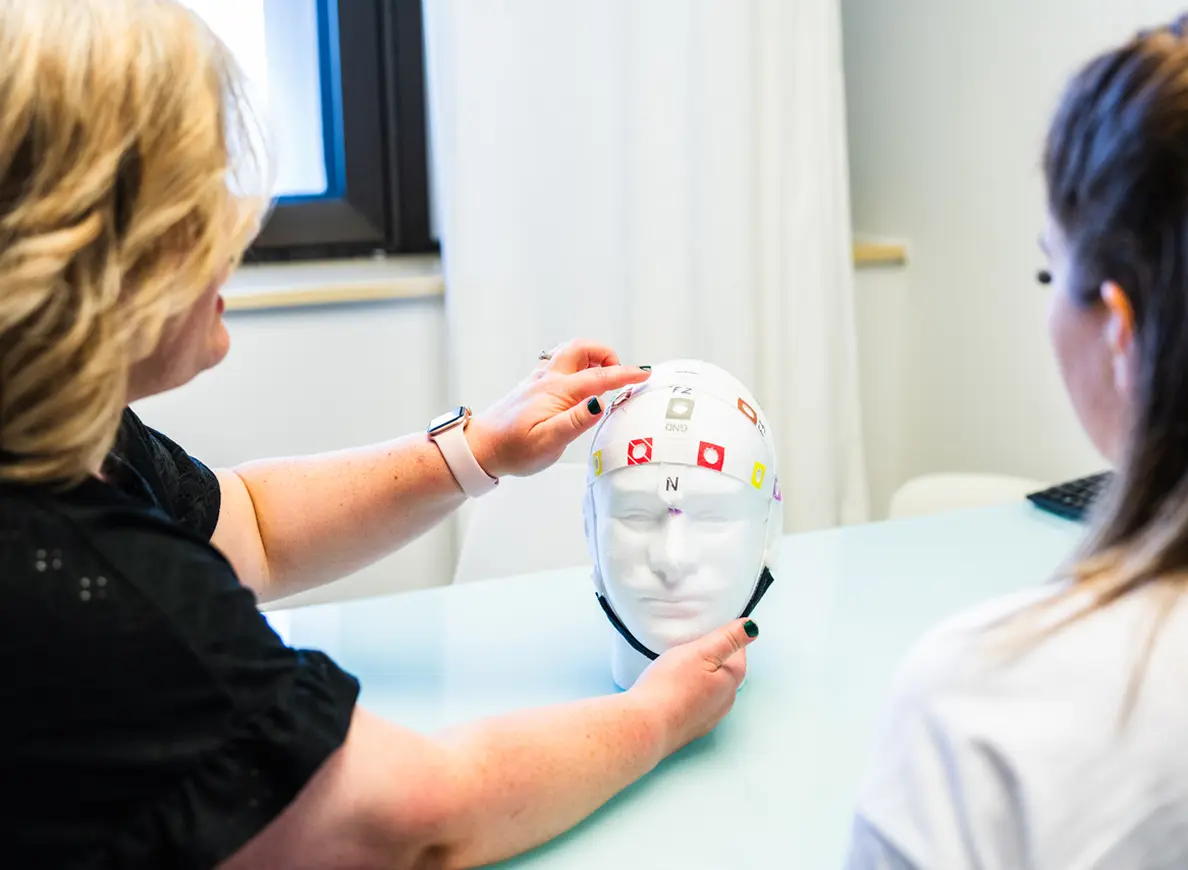
Sound frequency refers to the number of oscillations of audible sound waves per second, measured in hertz (Hz). Specific sound frequencies have different effects on the body, and are used in Soaak's sound frequency compositions to target specific areas to generate outcomes using the body's innate mechanisms.
Sound Frequency Therapy
- Sound frequency therapy is a non-invasive, pharmacology-free modality clinically validated to support cognitive clarity, stress resilience, and sleep performance.
- Sound therapy integrates cleanly into human performance optimization programs across the five performance domains.
I listen to the sleep sounds right before bedtime and the calming sounds during the day if I need a boost to relieve stress or anxiety. My mind and body are enriched daily by the Soaak App.
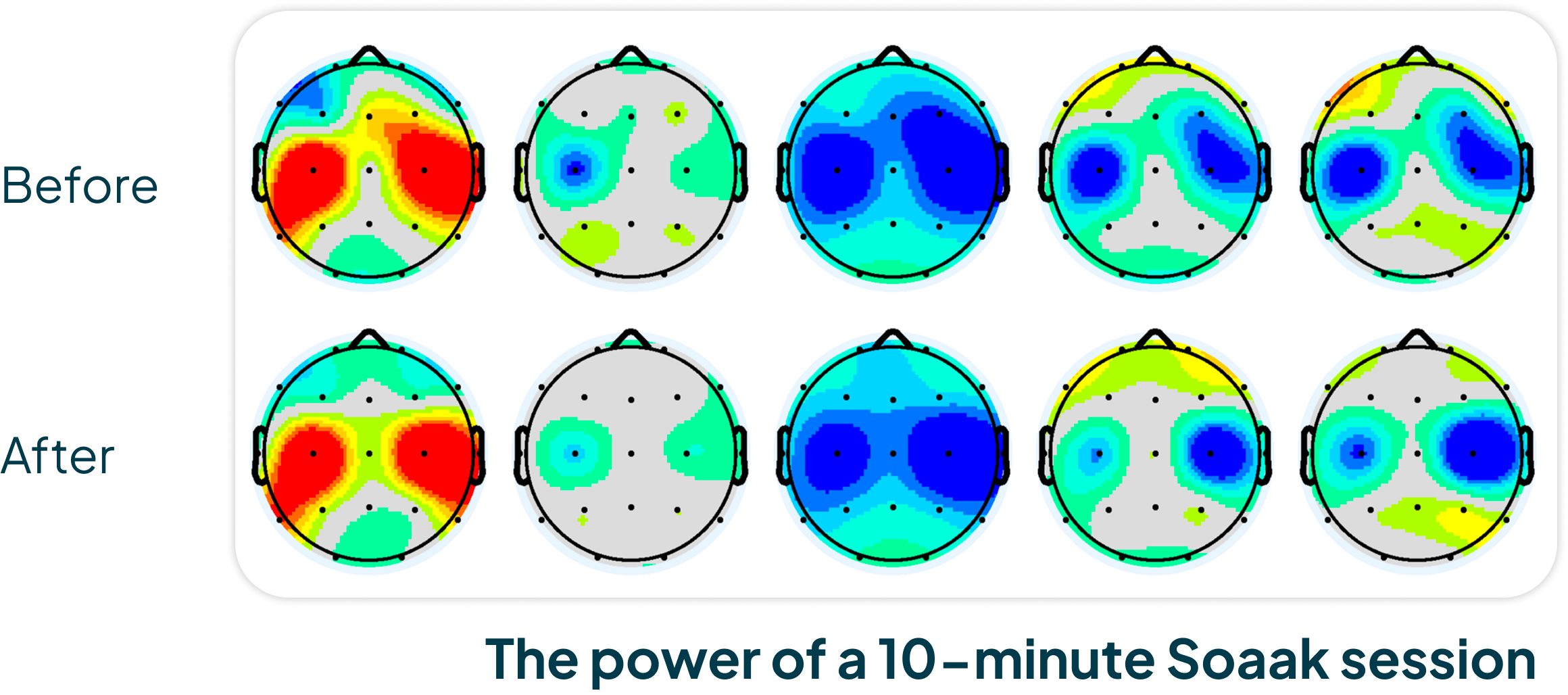
The science behind this outcome
Proven with Third-Party Sleep Research
Across 800 million hours of sleep data, third-party researchers found that Soaak's proprietary sound frequency compositions:
Supported By Medical Journals
Low-frequency vibrations used in VAT may help reduce inflammation, improve circulation, and promote muscle relaxation, though larger clinical trials are still needed.

Applying specific sound frequencies can improve plant height, leaf area, branch and boll numbers, germination rates, and drought tolerance.

40 Hz low-frequency sound stimulation may improve quality of life and reduce medication use in fibromyalgia patients, highlighting the need for further controlled research.

Listening to music influences key stress systems by lowering cortisol and sympathetic activity, improving mood and anxiety, with promising effects across various clinical settings.
Listening to relaxing music prior to a stressor raises cortisol levels yet helps the autonomic nervous system recover faster, with no significant effects on psychological stress or anxiety.
Listening to 432 Hz music may enhance brain relaxation and improve sleep quality in individuals with delayed sleep onset.
Mental processes remain active during sleep, influencing sleep depth. Activating the concept of “relaxation” during sleep using spoken relaxing words affects sleep quality.
Music therapy approaches like RMT, AMT + Singing, and AMT significantly improve cognitive abilities in dementia patients while keeping dropout rates similar to usual care.
This offers a practical strategy to improve focus and productivity in such settings.
Students who received VAT reported feeling less stressed and more relaxed, with physiological signs supporting these effects.
An observational study finds significant decreases in tension, anxiety, and depressed mood—and boosts in spiritual well-being—after just one session of sound meditation.
In a randomized, sham-controlled trial, ART significantly outperformed placebo in reducing nasal symptoms, with no reported adverse effects.

While results are promising, more controlled studies are needed to confirm its effectiveness.
It supports innovation in areas like brain health and pain management by addressing safety and testing gaps.

Low-frequency vibrations used in VAT may help reduce inflammation, improve circulation, and promote muscle relaxation, though larger clinical trials are still needed.
As reflected by increased alpha activities without any significant effect upon the sleep latency, thus improving sleep performance of those listening to 432Hz.

The study used 432 Hz to reduce anxiety and stress in emergency nurses during the COVID-19 pandemic.

The frequency of 432 Hz is effective in decreasing salivary cortisol levels before tooth extraction.

The effects of anxiety impacted their emotional well-being, cognitive functioning, and physical well-being.

This study explores sympathetic resonance, the synchronization of more than one oscillatory pattern, especially as it relates to information transfer, energy flow, and biological systems.
The study goes so far as to say that motivational text messages “should be a public health priority.”

This is true for subjective and measured stress reduction of the endocrine and the autonomic nervous systems.

Soaak has been a game-changer for my team and me. In a world that is ever changing and driving anxiety for many, it is GREAT to know we have a partner and resource that our associates and their families can rely on.
The science behind this outcomeHow is Soaak different?
Soaak’s sound frequency compositions are created by using multiple frequencies in one audio track for specific outcomes. Soaak's sound frequency compositions can be delivered through a variety of methods, including the use of speakers, headphones, and bone-conducting headsets.
Start free trial






Global Impact
Partnerships





Want to learn more about the science of sound?